
Walking home. Waiting for the school bus. Riding a bicycle. At the park. A stranger approaches, a suspicious vehicle stops nearby, an aggressive animal appears, or something simply does not feel right.
In that moment, pulling out a cellphone, unlocking it, finding an app or making a call may not be practical.
A loved one living with dementia or another cognitive impairment may not recognize that they are lost or remember how to call for help. What if the family could know sooner — and know where to start looking?
The telephone may be only a few feet away — but completely unreachable.
Pinned beneath equipment. Injured in a field. Working miles from another person. A cellphone may not be within reach when it is needed most.
The idea behind Springfield SOS began with a conversation about municipal priorities.
A Springfield resident put the issue plainly: taxes and municipal spending matter, but his number-one concern was the security of his children.
That raises a question worth asking: can modern low-power technology, existing or repurposed infrastructure and community participation provide Springfield families with an affordable additional safety connection?
And that question must include all of Springfield — our communities, farms, businesses, employers and rural residents alike.
Springfield SOS is not intended to replace existing emergency or public-safety services. It explores a simple additional connection between a person in need, someone they trust, and emergency services when required.
The objective is simple: complement what already works and explore how an already safe Springfield could be made safer for all — children first and foremost.
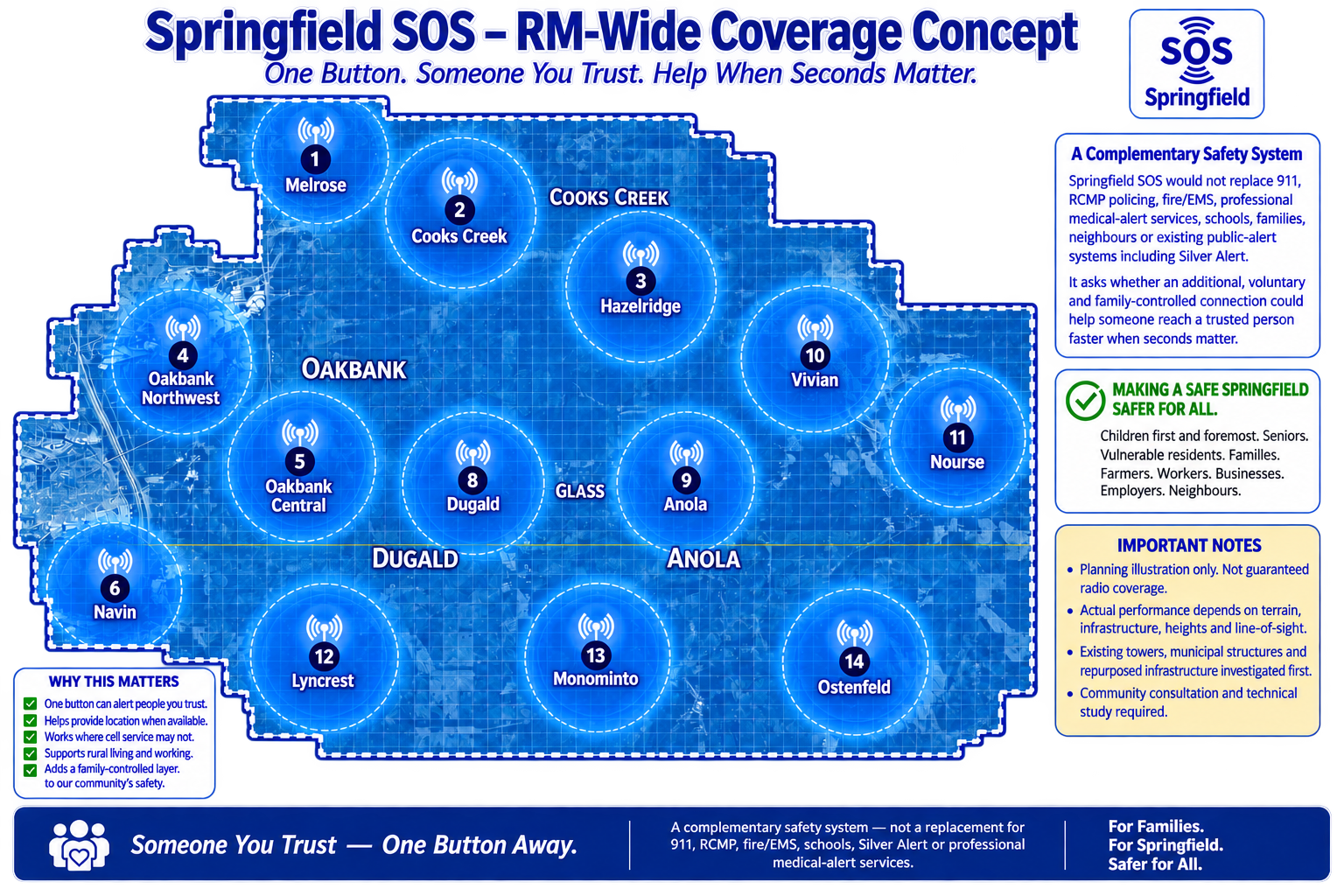
Conceptual planning illustration only. Coverage areas and gateway locations are illustrative and would require technical study, site evaluation and community consultation.